The ROI of AI Code Review Governance: Numbers That Matter
Your auditor asks for proof. Your team scrambles. Here is the math on what that scramble costs and what governance saves.
I have sat in enough budget meetings to know that “better governance” does not open wallets. Numbers open wallets. Here are the numbers.
The Audit Time Equation
Start with compliance audits, because that is where the money is most visible.
A SOC 2 Type II audit requires evidence that every code change was reviewed. For a team of 20 engineers producing 40 PRs per week, the auditor needs to sample and verify review documentation for roughly 2,080 PRs per year. At the average audit, an engineer spends 15-20 minutes per PR retrieving the review context, explaining the approval rationale, and answering auditor questions.
That is 520-693 hours per year spent on audit evidence retrieval. At a loaded cost of $150/hour for a senior engineer, you are spending $78,000-$104,000 annually just answering auditor questions about code review.
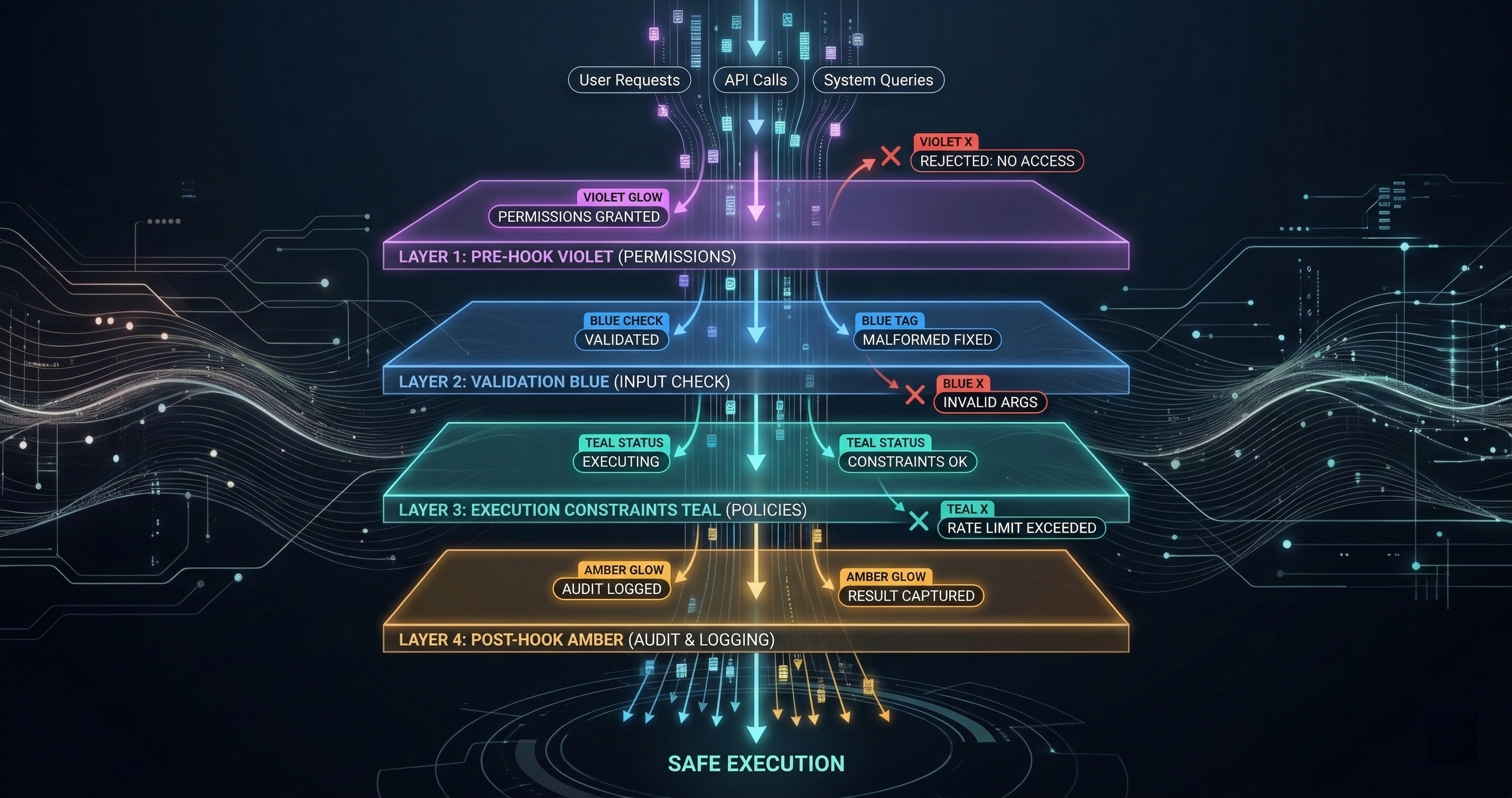
With GuardSpine, every PR has a sealed evidence bundle. The bundle contains the diff, the risk tier, the AI review verdicts, the policy evaluations, and the cryptographic proof that none of it was modified after the fact. The auditor downloads the bundle, runs the offline verifier, and moves on. Time per PR: under 2 minutes.
That reduces the audit evidence cost to $10,400-$13,900. The savings: $67,600-$90,100 per year for a 20-person team.
Scale to 100 engineers and the numbers get absurd. Five times the PRs, five times the audit cost, same reduction ratio. You save $338,000-$450,000 annually on audit preparation alone.
Security Incident Prevention
This one is harder to quantify because you are measuring events that did not happen. But we can work from industry baselines.
IBM’s Cost of a Data Breach Report (2025) puts the average cost of a data breach at $4.88 million. The Verizon DBIR (2025) found that 26% of breaches involved vulnerabilities in web applications, many of which were introduced through code changes.
A team producing 2,080 PRs per year with no governance has no systematic way to detect when a PR introduces a security vulnerability. Traditional static analysis catches known patterns — SQL injection, XSS, hardcoded credentials — but misses logical vulnerabilities. An AI reviewer that understands the semantic meaning of a change catches both.
In our early deployments, GuardSpine flagged security-relevant changes in approximately 4% of PRs. Of those, roughly 30% had actual issues that warranted revision. That is 25 PRs per year for a 20-person team where a security problem was caught before it shipped.
Not all of those would have become breaches. Most would have been caught eventually by penetration testing, bug bounties, or production monitoring. But the earlier you catch a vulnerability, the cheaper the fix. The NIST cost escalation model shows that a bug caught in production costs 30x more to fix than one caught at code review.
Conservative estimate: if even one of those 25 catches prevents an incident that would have cost $50,000 in response, remediation, and customer impact, governance paid for itself. If it prevents a $500,000 incident, the ROI is overwhelming.
Developer Velocity Impact
This is the objection I hear most: “Governance will slow us down.” Here is what actually happens.
Without governance, PRs sit in a review queue waiting for a senior engineer. The median wait time for code review at a company with 50+ engineers is 4-8 hours. Some PRs wait days. This is not a governance problem — it is a review capacity problem.
GuardSpine triages PRs by risk tier. L0 and L1 changes — which constitute 60-70% of all PRs — get an AI review and auto-approve within 90 seconds. The author does not wait for a human reviewer. The human reviewer does not spend time on low-risk changes.
For the remaining 30-40% of PRs, the AI review provides a structured summary that reduces human review time by 40-60%. The reviewer reads the governance verdict, checks the flagged areas, and makes a decision. A 45-minute review becomes a 20-minute review.
Net effect on the team: L0-L1 PRs ship hours faster. L2-L4 PRs ship with better information and shorter review cycles. Total developer hours spent on code review decrease by 30-50%.
For a 20-person team where each engineer spends 6 hours per week on code review, a 40% reduction saves 48 engineer-hours per week. At $150/hour loaded cost, that is $374,400 per year in recovered engineering capacity.
The Cost of Not Having Governance
Frame the question differently. What does it cost you today to not have governance?
Compliance risk. If your auditor finds that PRs were merged without documented review, you get a qualified opinion or a failed audit. The cost varies by industry. In financial services, a failed SOC 2 can block enterprise contracts worth millions. In healthcare, a HIPAA violation ranges from $100 to $50,000 per violation, up to $1.5 million per year per category.
Insurance premiums. Cyber insurance underwriters are starting to ask about AI governance practices. Companies that can demonstrate systematic review of AI-generated code are getting better rates. The differential is 10-20% on premiums that typically run $50,000-$200,000 per year for mid-market companies.
Customer trust. Enterprise customers are adding AI governance requirements to their vendor security questionnaires. “How do you review AI-generated code?” is now a standard question. If your answer is “our engineers review it manually,” follow-up questions about review coverage and evidence retention will expose gaps.
Talent retention. Senior engineers do not want to spend their time rubber-stamping low-risk PRs. They want to work on hard problems. A system that automatically handles 60-70% of reviews and gives them structured context for the rest is a quality-of-life improvement that affects retention.
Building the Business Case
Here is the template I give to engineering leaders who need to justify the spend:
| Category | Annual Cost Without Governance | Annual Cost With Governance | Savings |
|---|---|---|---|
| Audit evidence preparation | $78,000-$104,000 | $10,400-$13,900 | $67,600-$90,100 |
| Developer time on reviews | $936,000 | $561,600-$655,200 | $280,800-$374,400 |
| Security incident (expected value) | $50,000-$500,000 | Reduced by 60-80% | $30,000-$400,000 |
| Compliance penalty risk (expected value) | Varies | Reduced by 90%+ | Varies |
| Total estimated savings | $378,400-$864,500 |
These numbers are for a 20-person engineering team. The cost of GuardSpine for a team that size is a fraction of the lowest savings estimate. The ROI is not close.
What to Measure After Deployment
Deploy governance, then track these four numbers monthly:
- Hours spent on audit preparation. This should drop by 80%+ after the first quarter.
- Median PR review wait time. This should drop by 50%+ as low-risk PRs auto-resolve.
- Security findings per quarter. The numerator should go up (more findings before production) while production incidents go down.
- Engineering hours on code review. Total hours should decrease even as coverage increases.
If any of these numbers move the wrong direction, something is misconfigured. Fix the configuration, not the concept.
The Bottom Line
AI governance is not a cost center. It is an efficiency multiplier that happens to also produce compliance evidence. The audit savings pay for the tooling. The velocity improvements pay for the team’s time. The security catches prevent incidents that would cost orders of magnitude more than the entire governance program.
The question is not “can we afford governance?” It is “can we afford to explain to the board why we don’t have it?”
Book a call to build the business case for your organization. I will bring the spreadsheet.